
Blogs
Glintee offers innovative solutions that enhance therapy recommendations from practitioners through artificial intelligence and advanced tools, designed to improve intervention time and outcomes. The solution adds value for patients, practitioners, and insurance providers by offering compliance tools and features that support better patient retention and a stronger bottom line for businesses.
AI for Better Therapy Outcomes
Beyond the Clinic: The AI Revolution in Patient Progress Tracking
How artificial intelligence is transforming rehabilitation outcomes and streamlining patient care for PT/OT practices

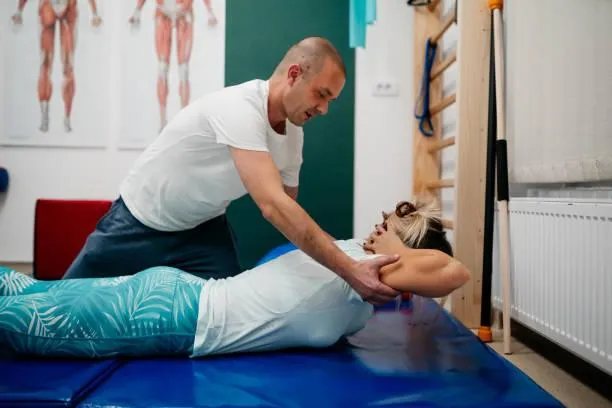
Therapy Success with adherance and no relapse
Improving Adherence and Reducing Relapse: Smarter Tools for Rehab and Pain Management
How AI-powered monitoring is transforming patient outcomes in rehabilitation and pain management clinics
Transforming Home Exercise Programs
Boosting Outcomes and Practice Growth with Smarter Rehab Monitoring
Remote therapeutic monitoring is revolutionizing rehabilitation therapy by enabling practitioners to generate an additional $25,000 annually while dramatically improving patient outcomes through technology-enhanced home exercise programs. This emerging field combines clinical excellence with sustainable revenue growth, positioning forward-thinking physiotherapists and occupational therapists at the forefront of value-based healthcare delivery.


Unlocking Hidden Revenue Streams
The Revenue Power of Remote Therapeutic Monitoring for Therapists
The healthcare landscape is evolving rapidly, and forward-thinking therapists are discovering a powerful tool that's reshaping both patient care and practice profitability: Remote Therapeutic Monitoring (RTM). This innovative approach isn't just changing how we deliver therapy—it's creating unprecedented opportunities for sustainable revenue growth.


FAQS
How can physical therapy help with neck pain?
Physical therapy addresses neck pain through manual therapy, targeted exercises to strengthen weak muscles, stretches to improve flexibility, and posture correction techniques. Your Physiotherapist can provide education and suggstions on proper sleeping positions and workstation setup or tools and practices to prevent future episodes.
What treatment options are available for carpal tunnel syndrome?
Treatment for carpal tunnel includes nerve gliding exercises, wrist and hand strengthening, ergonomic assessments of your workspace, splinting recommendations, and techniques to reduce inflammation. Early intervention often prevents the need for surgery based on recommendations from your physical therapist.
Can physical therapy improve my sitting posture?
Yes, your physical therapist can assess your current posture and identify muscle imbalances that contribute to poor positioning. Treatment includes strengthening weak postural muscles, stretching tight areas, ergonomic workplace assessments, and teaching you exercises you can do throughout your workday.
How long does physical therapy treatment take?
Treatment duration varies depending on your condition, severity, and individual response. Acute injuries may improve in 2-4 weeks, while chronic conditions or postural issues may require 6-12 weeks. Your Physical therapist will discuss realistic timelines during your initial assessment.
What is remote therapy monitoring?
Remote therapy monitoring allows you to complete your prescribed exercises at home while your physical therapist tracks your progress through digital tools. This helps ensure you're performing exercises correctly and staying on track with your recovery goals.
Do I need special equipment for remote monitoring?
Most remote monitoring can be done using your smartphone or tablet. Depending on your treatment plan, you may need simple equipment like resistance bands or small weights, which your physical therapist will discuss if your condition can use remote therapy monitoring.
Is remote monitoring as effective as in-person sessions?
Studies show that remote monitoring can be highly effective for many conditions, especially when combined with periodic in-person visits. It allows for more consistent daily practice and real-time feedback on your progress.
How do I get started with remote monitoring?
If you are a Therapist, sign up for a demo and leverage the efficiency and growth potential to your practice. If you are a patient who feels that remote therapy monitoring can help your situation, ask your therapist to reach out to us to leverage the solution.
Does RTM use online video conferencing?
Remote Therapy monitoring (RTM) that glintee provides, uses computer vision independently, with the help of computer or a mobile device of the patient. The therapist receives the report for it. Thus video conferencing is not needed. This frees the time of the therapist, so as to attend to other patients.
What are the remote therapy monitoring CPT codes?
CPT 98975: This code is for the initial set-up and patient education on the use of equipment for monitoring the respiratory and musculoskeletal systems. It is a one-time billable code.
CPT 98977: This code is for the supply of RTM devices with scheduled recording and/or programmed alert transmission to monitor the musculoskeletal system for each 30-day period.
CPT 98980: This code covers the first 20 minutes of RTM services provided by clinical staff, MD, or QHCP over a 30-day period, requiring at least one interactive communication within the calendar month.
CPT 98981: This code is for each additional 20 minutes of RTM services provided by clinical staff, MD, or QHCP during a 30-day period, also requiring at least one interactive communication within the calendar month.
Are there any recommendations or examples of reimbursments
CMS.gov has RTM reimbursement suggestion as an example. Please refere to the following URL https://www.cms.gov/medicare/coding-billing/therapy-services/billing-examples-using-cq/co-modifiers-services-furnished-whole-or-part-ptas-and-otas
Example #I: Remote Therapeutic Monitoring (RTM) Services
Billing Scenario: The PT and PTA independently provide a total of 47 minutes of RTM treatment management services during the 30-day period, defined by codes 98980 (for the first 20 minutes) and 98981 for each additional full 20-minute increment.
● For purposes of billing CPT code 98980: The first 20 minutes of RTM treatment management services were furnished by the PT. Therefore, CPT code 98980 is billed without a CQ modifier.
Billing Analysis: Even though CPT code 98980 represents the initial 20 minutes of RTM service for a 30-day period, it’s treated as an untimed code for purposes of billing Medicare since only 1 unit can be billed.
Bill as Follows: CPT code 98980 is billed without a CQ modifier because the PT furnished the first 20 minutes the RTM service in the 30-day period.
● For purposes of billing CPT code 98981: From the remaining 27 minutes, total up the minutes provided by the PT and/or by the PTA ─ with 17 minutes furnished by the PTA and 10 minutes furnished by the PT. Twenty-seven minutes qualifies for billing one 20-minute unit of 98981. So, subtract out the minutes provided by the PT and/or PTA from the final 7 minutes of the 30-day period of RTM services since there is no partial billing. In this scenario, the PTA furnished all the minutes of the last 7 minutes so they are subtracted from the 17 minutes, resulting in 10 minutes. The billing scenario follows:
PTA ─ 10 minutes of 98981
PT ─ 10 minutes of 98981
Total = 20 minutes of 98981 (qualifies to bill one 20-minute unit)
Billing Analysis: The 20 total minutes of additional time allows one full 20-minute unit of CPT code 98981 to be billed: The one 20-minute unit is billed with a CQ modifier because the PTA’s 10 minutes is greater than 10 percent of the 20-minute total. Using the percentage method where 10 (PTA’s minutes) divided by 20 total minutes (10 PTA + 10 PT = 20 minutes) equals 0.50 X 100 = 50 percent which is greater than the 10 percent standard of 2 minutes.
Bill as Follows: Bill 1 unit of code 98981 with the CQ modifier for one 20-minute unit because the PTA’s 10 minutes exceeds the 10 percent time standard.
Note about RTM Set-Up Code 98975 and the 2 Device codes 98976 and 98977:
The two device codes, CPT codes 98976 and 98977, are not subject to the de minimis standard, and they are billed only once per the episode of care.
CPT code 98975, for the initial set up and patient education on use of the device is subject to the de minimis policy as an untimed code. Therefore, if the PTA or OTA provides more than 10 percent of the service, the CQ/CO modifier is applied to the 1 unit of CPT code 98975.
Who can use CPT code 98981 for Remote Therapeutic Monitoring treatment management billing to insurance for patients?
Practitioners eligible to bill CPT code 98981 (remote therapeutic monitoring treatment management, each additional 20 minutes) include physicians and other qualified healthcare professionals whose scope of practice includes RTM services. Specifically, this encompasses:
· Physicians (MDs and DOs)
· Nurse Practitioners (NPs)
· Physician Assistants (PAs)
· Clinical Nurse Specialists (CNSs)
· Physical Therapists (PTs) in private practice
· Occupational Therapists (OTs) in private practice
· Speech-Language Pathologists (SLPs) in private practice
· Certified Nurse Midwives
· Certified Registered Nurse Anesthetists
· Clinical Social Workers
· Psychologists
· Qualified Audiologists
· Registered Dietitians or Nutrition Professionals
All practitioners must bill in accordance with applicable state laws and scope of practice regulations. For therapists such as PTs, OTs, and SLPs, billing must be under a therapy plan of care with appropriate modifiers, while physicians and some other practitioners may bill without such modifiers. Only one practitioner may bill RTM services per patient in a 30-day period.
